Production Architecture and Threat Model
Production Architecture and Threat Model
Toy VMs taught the pieces. The capstone is one desk fleet on NixOS 26.05: five roles, WireGuard, ephemeral workers, sops-nix, Colmena. The boring default is: write the threat model first, then the flake — not a mesh of tools looking for a problem.
Mental model
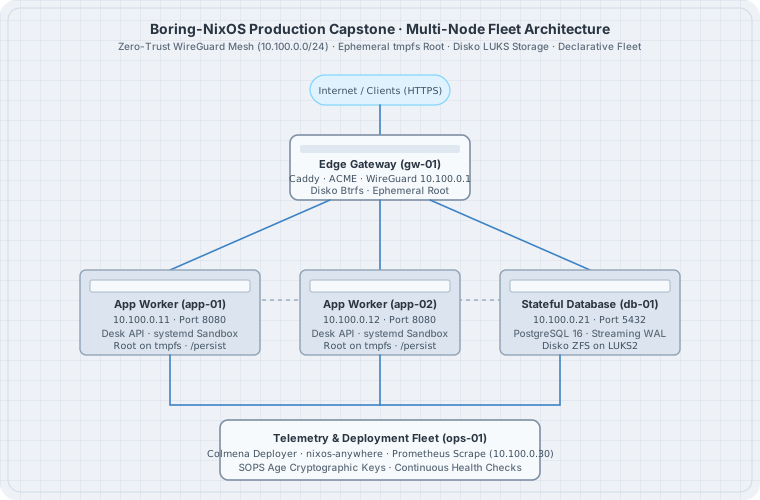
| Host | Role | Persist |
|---|---|---|
gw-01 |
Caddy, ACME, nftables; WireGuard 10.100.0.1 |
certs, Caddy state |
app-01, app-02 |
desk-api; tmpfs root; DynamicUser |
nothing (ephemeral) |
db-01 |
PostgreSQL; Disko LUKS + Btrfs | /persist |
ops-01 |
Colmena, Prometheus, sops key broker | hive checkout, keys |
Invariants:
- No secret bytes in git or
/nix/store. - Store is read-only. Payloads in
/etcdie on reboot (workers). - WireGuard for all east-west. No DB port on the public NIC.
flake.lockon nixos-26.05; rollback is a generation, not a restore CD.- Backups of
/persist(restic), not of/nix/store.
Public surface: TCP 443 on gw-01 (and UDP 51820 on every peer). SSH from the office VPN or the ops-01 jump only.
Worked examples
Case 1: Inventory in the flake
Save as flake.nix:
# flake.nix
{
  description = "Desk production fleet";

  inputs.nixpkgs.url = "github:NixOS/nixpkgs/nixos-26.05";

  outputs = { self, nixpkgs }:
    let
      mk = name: modules: nixpkgs.lib.nixosSystem {
        system = "x86_64-linux";
        modules = [
          { networking.hostName = name; system.stateVersion = "26.05"; }
        ] ++ modules;
      };
    in
    {
      nixosConfigurations = {
        gw-01  = mk "gw-01"  [ ./hosts/gw-01.nix ];
        app-01 = mk "app-01" [ ./hosts/app-01.nix ];
        app-02 = mk "app-02" [ ./hosts/app-02.nix ];
        db-01  = mk "db-01"  [ ./hosts/db-01.nix ];
        ops-01 = mk "ops-01" [ ./hosts/ops-01.nix ];
      };
    };
}
Five names. Five system.stateVersion = "26.05" because they are born here. Do not copy a stateVersion from a laptop that was installed on 24.11.
nix flake showYou should see five nixosConfigurations.
Save as hosts/gw-01.nix (shape — later chapters fill Caddy and WireGuard):
# hosts/gw-01.nix
{
  imports = [ ../modules/base-system.nix ../modules/wireguard-mesh.nix ];
  networking.firewall.allowedTCPPorts = [ 80 443 ];
  networking.firewall.allowedUDPPorts = [ 51820 ];
  # services.caddy … in the hardened-network chapter
}
If a port is not in docs/threats.md, it is not in this module.
Case 2: Trust boundary in git
Save as docs/threats.md:
# docs/threats.md
Public NIC: 443/tcp on gw-01, 51820/udp on every peer.
SSH: office VPN or ops-01 jump. No 22/tcp from 0.0.0.0/0.
Postgres: 5432/tcp on 10.100.0.21, wg0 only.
desk-api: 8080 on wg0; Caddy reverse-proxies from gw-01.
Attacker with a stolen app-01 disk: tmpfs, no secrets.
Attacker with a stolen db-01 disk: LUKS; restic passphrase is not on the disk.
If a port is not in this file, the firewall and the cloud SG must not open it.
git grep -n 'allowedTCPPorts\|allowedUDPPorts' -- '*.nix'Every port in that grep lands in docs/threats.md or it is a bug. 0.0.0.0/0 on 22 is a bug even if the module lists 22.
Case 3: Secret inventory
| Secret | Mechanism | Lives |
|---|---|---|
| WireGuard private keys | sops-nix → /run/secrets |
encrypted in git |
| Postgres password | sops-nix EnvironmentFile |
encrypted in git |
| ACME account / certs | Caddy module + /persist |
gw-01 persist |
| Colmena SSH key | ops-01 persist |
not the flake |
| restic password | sops-nix on db-01 / ops-01 |
encrypted in git |
A secret that is only in a password manager is a secret that will not survive the next hire.
Case 4: Failure drill list
| Failure | Response |
|---|---|
Lose app-01 |
traffic already on app-02; nixos-anywhere a replacement; Colmena |
Lose db-01 |
restic restore onto a new Disko disk; Colmena; check pg_isready on wg0 |
Bad generation on app-01 |
previous generation / Colmena rollback; revert git |
Lose gw-01 |
ACME + persist restore; DNS TTL is why you kept it short |
| Stolen laptop with ops checkout | sops age key is not on the laptop; rotate the Colmena SSH key |
Write the restic repository URL in docs/threats.md. Not the password.
Case 5: What this capstone is not
Not multi-region Kubernetes. Not Vault HA. Not a service mesh. Those are later, optional, and they each add a new trust boundary. If the five hosts rebuild from git + restic, you passed.
Order of the remaining capstone chapters: Disko + impermanence, WireGuard, application stack, Colmena + restic. Do not start with Istio.
The trap
The trap is starting with three clouds and a mesh before SSH keys persist across reboot. Finish Disko, impermanence, sops, WireGuard, Colmena, restic. In that order. A threat model that lists “Zero Trust” and does not list /persist is a slide, not an ops doc.
The boring rule
- 26.05 lock. Five hosts. One mesh. One secret system (sops).
- Public surface is 443 (+ 22 only from a tight SG / VPN).
/persistis the backup. Store is the cache.- Rollback is a generation.
- Write the threat model in git next to the flake.
Try this
- Copy the host table into
docs/threats.md. Fill module file names. - List every port you think is open; compare to firewall + cloud SG in later chapters.
- Name the restic repository in
docs/threats.md. - Confirm
stateVersionwill be"26.05"on new metal — not copied from an old laptop.