TinyGo 1 — Toolchain & blink
TinyGo elective 1 — Toolchain & blink
Elective · ~3h (after Stage VII or any time you want embedded Go)
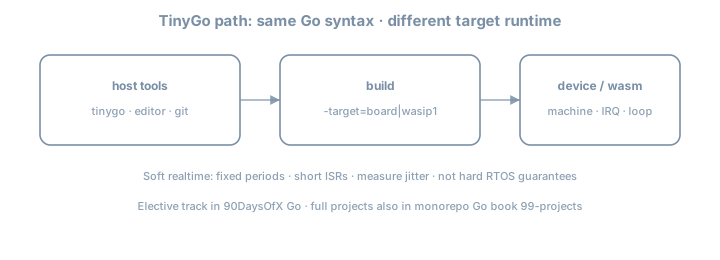
Goal: Install TinyGo, pick a target, build blink or wasip1 hello, understand host Go vs device runtime.
Note
This elective is optional. The main Go Days 1–90 never require a microcontroller. Full project write-ups also live in monorepo book Go → projects 41–45.
Why this elective exists
Desktop Go teaches concurrency and services. TinyGo reuses Go syntax for MCUs and WASM with a smaller runtime and the machine package. Soft realtime loops (sensors, buttons, UART) are a different design muscle than HTTP handlers.
Theory
| Desktop Go | TinyGo |
|---|---|
| Full stdlib, GC, OS threads | Subset stdlib; target-specific runtime |
go build |
tinygo build -target=... |
net/http everyday |
Often no network stack on bare metal |
| Soft RT only | Soft RT with IRQs/timers — not certified hard RTOS |
Targets
tinygo version
tinygo targets | head
tinygo info wasip1
tinygo info pico   # example board — use yours
Lab
mkdir -p ~/lab/90daysofx/go/tinygo01 && cd ~/lab/90daysofx/go/tinygo01
go mod init example.com/tinygo01
WASIp1 hello (no hardware):
package main

import "fmt"

func main() {
    fmt.Println("tinygo elective 01 ok")
}
tinygo run -target=wasip1 .Blink (board with machine.LED):
package main

import (
    "machine"
    "time"
)

func main() {
    led := machine.LED
    led.Configure(machine.PinConfig{Mode: machine.PinOutput})
    for {
        led.High()
        time.Sleep(500 * time.Millisecond)
        led.Low()
        time.Sleep(500 * time.Millisecond)
    }
}
tinygo flash -target=YOUR_BOARD .Checkpoint
tinygo versionworks
- wasip1 or blink succeeds
- Notes: target name + pin
Tomorrow (elective)
TinyGo 2 — Button + interrupt / debounce (93-tinygo-02-…).